1
Behavioral Consistency
Going to bed and waking at similar times each day helps regulate your internal clock. We work with your actual schedule rather than imposing idealized hours.
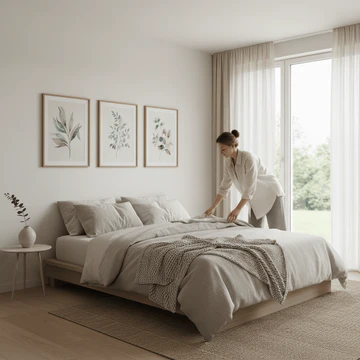
Sleep hygiene refers to the habits and environmental choices that support consistent, quality rest. Our consultations explore these topics from an educational perspective.
Last updated:
Sleep hygiene is not a single technique but a collection of practices spanning behavior, environment, and daily rhythm. We address each area during consultations.
Going to bed and waking at similar times each day helps regulate your internal clock. We work with your actual schedule rather than imposing idealized hours.
A predictable wind-down sequence signals to your body that rest is approaching. This might include reading, gentle stretching, or journaling — tailored to your preferences.
Physical movement and natural light exposure during waking hours contribute to better evening readiness. We discuss realistic activity levels for your lifestyle.
Caffeine, alcohol, and heavy meals close to bedtime can interfere with rest. We provide general timing guidelines without making health claims.
Gradually reducing ambient light sixty to ninety minutes before bed may support your natural rest signals. Warm-toned lamps and dimmer switches are practical starting points.
Setting a personal cutoff for phones, tablets, and televisions reduces blue-light exposure and mental stimulation. We help you find a realistic boundary.
A warm bath followed by a cooler bedroom can facilitate the natural temperature drop associated with falling asleep. Timing varies by individual preference.
Morning habits influence evening rest as much as nighttime routines. Exposure to natural light within the first hour of waking helps anchor your circadian rhythm.
We also discuss breakfast timing, hydration, and whether checking email immediately upon waking supports or undermines your overall energy management throughout the day.
Discuss Your RoutineScreens are part of modern life. Our approach focuses on mindful usage rather than complete elimination.
Most sleep literature suggests a cool bedroom, typically between 16 and 19 degrees Celsius. We help you assess whether your heating, bedding, and ventilation support this range.
A visually calm space can ease mental clutter before rest. Simple organisation strategies make the bedroom feel dedicated to winding down.
Optional white noise machines or lavender diffusers may support relaxation for some individuals. Preferences vary widely.
We review your questionnaire responses and journal entries to identify patterns in your current routine. No scoring systems or formal assessments are used.
Together, we select two or three focus areas for the first two weeks. Attempting too many changes simultaneously often leads to abandonment.
You receive a document outlining suggested habits, timing ideas, and journal prompts. It serves as a reference guide for your own use.
Each follow-up session adjusts the plan based on what worked, what felt unrealistic, and any new circumstances in your life.
Review of your week, journal highlights, and any questions that arose since the last session.
Deep dive into one or two hygiene topics relevant to your current focus areas, with educational materials provided.
Define specific, time-bound actions for the coming week. We use plain language and realistic timeframes.
Summary of key takeaways, resource recommendations, and scheduling of the next session if applicable.
All resources are informational and designed to support self-directed learning. They do not replace professional care from a licensed provider.